Parrot Cage Setup: Ultimate Guide to Size, Placement & Essential Accessories
Marcus Rodriguez
Avian Behavior Specialist
Table of Contents
- Introduction: Why Proper Cage Setup Matters
- Choosing the Right Cage Size for Your Parrot Species
- Optimal Cage Placement: Location Matters
- Essential Cage Accessories: Must-Haves for Every Parrot
- Perch Selection: Variety is Key to Foot Health
- Toy Essentials: Mental Stimulation & Enrichment
- Setting Up Proper Feeding Stations
- Parrot Cage Safety Checklist
- Cleaning & Maintenance Schedule
- Species-Specific Cage Setup Recommendations
- Frequently Asked Questions
- Conclusion: Creating the Perfect Parrot Habitat
Introduction: Why Proper Cage Setup Matters
Your parrot's cage is more than just a containment area—it's their home, sanctuary, and primary environment. A properly set up cage can significantly impact your parrot's physical health, mental wellbeing, and overall quality of life. According to the Association of Avian Veterinarians, inadequate cage setup is one of the leading causes of behavioral issues and health problems in companion parrots.
Important: A parrot spends the majority of its life in its cage, even with regular out-of-cage time. Investing in proper setup isn't optional—it's essential for your bird's wellbeing.
In this comprehensive guide, we'll cover everything you need to know about creating the ideal habitat for your feathered companion, from selecting the right cage size to choosing the essential accessories that promote physical and mental health.
"The cage is your parrot's castle—it should be safe, stimulating, and spacious enough to allow for natural behaviors like climbing, playing, and exploring." - Marcus Rodriguez, Avian Behavior Specialist
Ready to find the perfect cage for your new parrot?
Browse Our Premium Parrot Cages & AccessoriesChoosing the Right Cage Size for Your Parrot Species
Selecting the appropriate cage size is the most critical decision in parrot cage setup. The general rule is: buy the largest cage you can afford and accommodate in your space. Your parrot should be able to fully extend its wings in all directions without touching the cage sides.
Minimum Cage Size Requirements by Species
| Parrot Species | Minimum Cage Size | Bar Spacing | Notes |
|---|---|---|---|
| Budgies / Parakeets | 18" x 18" x 18" | 1/2" - 5/8" | Larger for multiple birds |
| Cockatiels | 24" x 24" x 24" | 5/8" - 3/4" | Height important for crest clearance |
| Conures | 24" x 24" x 30" | 5/8" - 3/4" | Active birds need horizontal space |
| African Greys | 36" x 24" x 48" | 3/4" - 1" | Intelligent birds need complex environments |
| Amazons | 36" x 24" x 48" | 3/4" - 1" | Active climbers need vertical space |
| Cockatoos | 36" x 36" x 48" | 1" - 1.5" | Large birds with long tails need extra room |
| Macaws | 48" x 36" x 60" | 1" - 1.5" | Massive birds need commercial-sized cages |
Safety Warning: Bar spacing is critical! Bars spaced too widely can lead to head entrapment or escape. Always follow manufacturer recommendations for your specific parrot species.
Cage Shape Considerations
While rectangular cages are most common, consider these shape factors:
- Rectangular cages provide the most usable interior space and are generally preferred
- Round cages are not recommended as they can cause stress and don't provide safe corners for retreat
- Tall, narrow cages may look impressive but provide less usable flying space
- Wide, shorter cages often provide better exercise opportunities for flighted birds
For more detailed species-specific requirements, the World Parrot Trust provides excellent resources on appropriate housing for different parrot species.
Optimal Cage Placement: Location Matters
Where you place your parrot's cage significantly impacts their sense of security, social interaction, and overall wellbeing. Follow these guidelines for optimal cage placement:
Ideal Placement Characteristics
- Against a wall: Provides security with a "safe" side
- Partial view of family activities: Allows social interaction without being overwhelming
- At chest/eye level: Positions your parrot as part of the family flock
- Natural light exposure: Important for circadian rhythms but not direct sunlight
- Stable temperature zone: Away from drafts, heating vents, and air conditioning
Areas to Avoid
- Kitchens: Fumes from non-stick cookware can be fatal to birds
- Drafty areas: Near doors, windows, or air vents
- Direct sunlight: Can cause overheating
- Isolated rooms: Parrots are social and need family interaction
- High-traffic hallways: Constant movement can cause stress
- Bathrooms: Humidity fluctuations and cleaning product fumes
Pro Tip: Create a "quiet corner" within the cage by placing it so one side is against a wall and adding a partial cover or placing a perch in a more enclosed area. This gives your parrot a retreat when they need privacy or feel overwhelmed.
Need help choosing the perfect spot for your parrot's cage?
Schedule a Free Cage Setup ConsultationEssential Cage Accessories: Must-Haves for Every Parrot
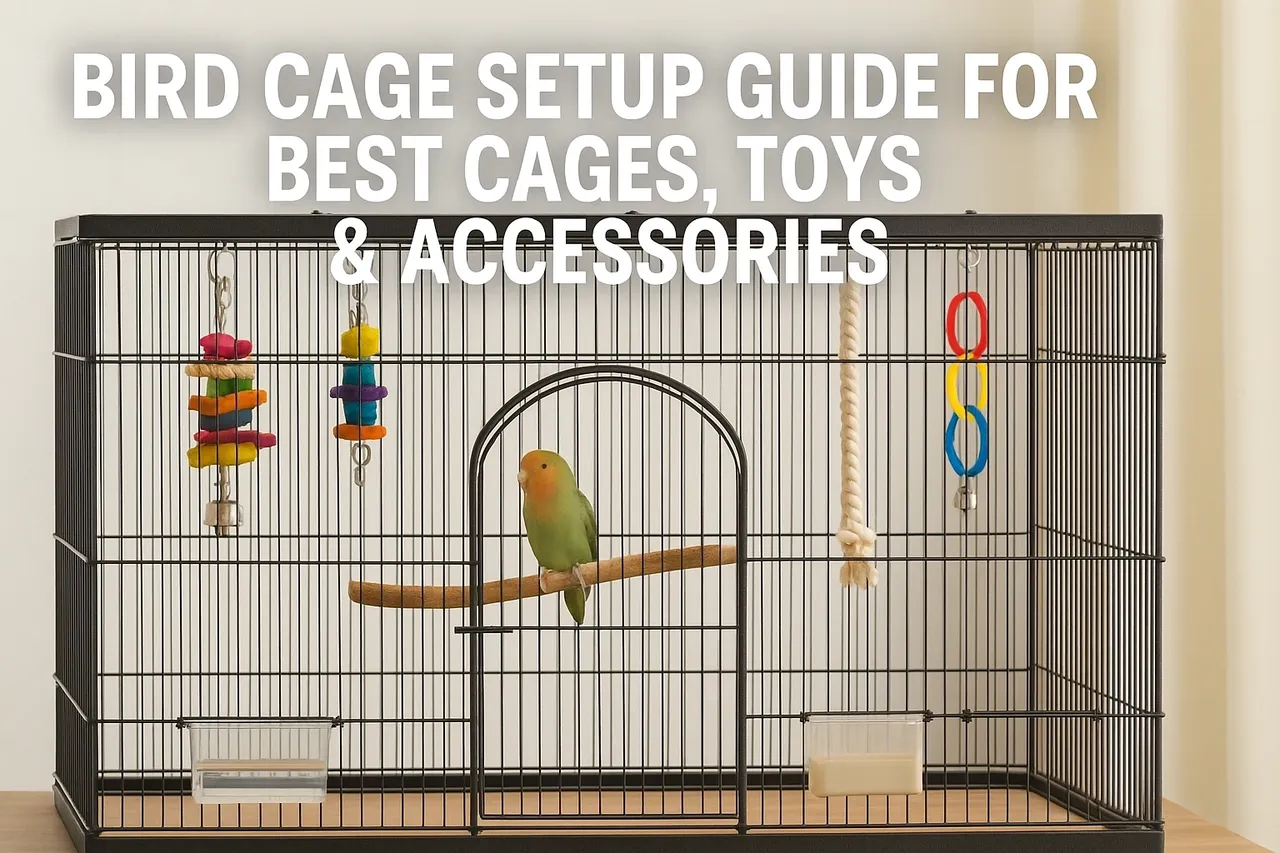
A properly equipped cage includes more than just food and water dishes. These essential accessories create a stimulating, comfortable environment that meets all your parrot's needs.
Food and Water Stations
- Stainless steel bowls: Easy to clean and disinfect, resistant to bacterial growth
- Multiple food stations: Separate dishes for pellets, fresh foods, and treats
- Secure mounting: Bowls should attach securely to prevent tipping
- Accessible placement: Position away from perches to minimize contamination
Sleeping and Security
- Sleeping hut or tent: Provides security and darkness for rest (caution with fabric huts that can be ingested)
- Cage cover: Light-blocking cover for regulating sleep cycles
- High perch: Elevated sleeping area mimics natural roosting behavior
Grooming and Health
- Cuttlebone or mineral block: Essential for beak maintenance and calcium
- Iodine block: Particularly important for budgies and cockatiels
- Misting bottle: For regular bathing opportunities
According to research from the Association of Avian Veterinarians, parrots with properly equipped cages show significantly lower rates of stress-related behaviors and better overall health outcomes.
Perch Selection: Variety is Key to Foot Health
Perches are not just places for your parrot to stand—they're essential tools for maintaining foot health. Different diameters, textures, and materials exercise different parts of the feet and prevent pressure sores.
Essential Perch Types
- Natural wood branches: Varying diameters exercise feet; safe woods include manzanita, dragonwood, and apple
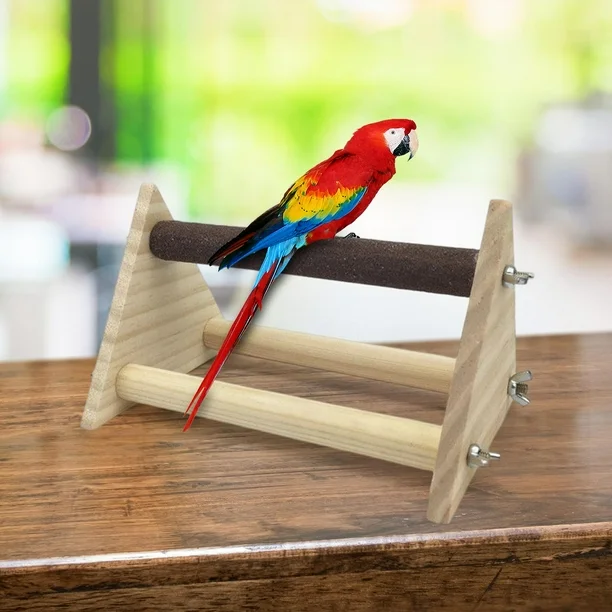
- Cement or mineral perches: Help maintain beak and nail length; place near food bowls
- Rope perches: Comfortable and flexible; monitor for fraying and ingestion
- Boomerang or corner perches: Maximize space utilization in cage corners
- Platform perches: Give feet a rest and are ideal for older or arthritic birds
Perch Placement Strategy
- Place highest perch for sleeping (natural roosting behavior)
- Position perches so tail feathers don't touch cage sides or floor
- Avoid placing perches directly above food or water bowls
- Create multiple pathways for climbing and exploration
- Include a perch near the door for easy access
Safety Warning: Avoid sandpaper-covered perches as they can cause serious foot abrasions. Also be cautious with concrete perches—they should not be the only perch type as they can be too abrasive for constant use.
Toy Essentials: Mental Stimulation & Enrichment
Toys are not luxuries—they're necessities for preventing boredom and associated behavioral problems like feather plucking and screaming. Rotate toys regularly to maintain novelty and interest.
Essential Toy Categories
- Foraging toys: Encourage natural food-seeking behavior; can be as simple as food hidden in paper cups
- Destructible toys: Satisfy natural chewing instincts; wood, cardboard, and palm leaf toys
- Noise-making toys: Bells, rattles, and other auditory stimulation
- Puzzle toys: Challenge intelligence and problem-solving skills
- Preening toys: Leather strips, paper, or other materials that satisfy preening urges
Toy Rotation Schedule
- Weekly: Rotate 2-3 toys to maintain novelty
- Monthly: Deep clean all toys and inspect for damage
- Seasonally: Introduce completely new toy types to prevent habituation
The Lafeber Company provides excellent resources on creating effective environmental enrichment programs for companion parrots.
Looking for safe, engaging toys for your parrot?
Shop Our Selection of Parrot Toys & EnrichmentSetting Up Proper Feeding Stations
How you arrange feeding areas within the cage can impact your parrot's eating habits, foraging behavior, and overall health.
Optimal Bowl Placement
- Place food and water bowls at chest height for easy access
- Position away from perches to minimize contamination from droppings
- Use multiple stations to encourage movement and exercise
- Consider removable bowls for easy cleaning and refilling
Foraging Station Setup
- Create dedicated foraging areas with puzzle feeders and treat-dispensing toys
- Use foraging trays filled with safe substrate (crinkled paper, wood chips)
- Hide treats throughout the cage to encourage natural foraging behavior
- Rotate foraging challenges to maintain interest
Nutrition Tip: Place fresh food bowls in easily accessible locations but remove uneaten fresh foods within 4 hours to prevent spoilage. Pellets can remain available throughout the day.
Parrot Cage Safety Checklist
Before introducing your parrot to their new cage, complete this comprehensive safety checklist:
Cage Structure Safety
- ✅ Bars are securely welded with no sharp edges
- ✅ Bar spacing appropriate for your parrot species
- ✅ Doors secure properly and cannot be opened by the bird
- ✅ Locks are parrot-proof (especially important for intelligent species)
- ✅ No lead, zinc, or toxic materials in cage construction
Interior Safety
- ✅ No small parts that could be swallowed
- ✅ Toys securely attached with stainless steel hardware
- ✅ No loose strings or fibers that could entangle feet
- ✅ Perches of varying diameters to prevent pressure sores
- ✅ No mirrors that could cause territorial behavior
Environmental Safety
- ✅ Cage positioned away from toxic fumes (kitchen, cleaning supplies)
- ✅ No direct exposure to drafts or extreme temperatures
- ✅ Electrical cords are inaccessible and protected
- ✅ Other pets cannot access or stress the caged bird
- ✅ Night cover available for proper sleep cycles
Cleaning & Maintenance Schedule
Regular cleaning is essential for preventing disease and maintaining a healthy environment. Follow this schedule for optimal cage hygiene:
Daily Tasks
- Remove and replace soiled bedding or cage liner
- Wash and refill food and water bowls
- Wipe down perches and toys with bird-safe cleaner
- Spot clean cage bars and surfaces
Weekly Tasks
- Remove and wash all accessories
- Replace all bedding material
- Thoroughly scrub cage bars, grates, and pans
- Inspect toys for damage and wear
- Rotate toy selection
Monthly Tasks
- Complete disassembly and deep cleaning
- Inspect cage structure for damage or rust
- Replace worn perches and toys
- Sanitize with bird-safe disinfectant
Cleaning Tip: Use vinegar and water solution or commercial bird-safe cleaners. Avoid harsh chemicals, bleach, or aerosol sprays that can be toxic to birds. Always rinse thoroughly and allow to dry completely before returning your parrot to the cage.
Species-Specific Cage Setup Recommendations
Different parrot species have unique needs and behaviors that should inform cage setup decisions.
African Grey Parrots
- Emphasis on puzzle toys and foraging opportunities
- Multiple food stations to encourage exploration
- Quiet retreat areas for this sometimes nervous species
- Durable toys that withstand intelligent problem-solving
Macaws
- Extra-large, heavy-duty construction
- Reinforced locks (they're master escape artists)
- Multiple large-diameter wood perches for foot health
- Destructible toys to satisfy powerful chewing needs
Cockatoos
- Powder-resistant surfaces (they produce dust)
- Comfort items like tents or huts
- Preening toys to redirect feather destructive behavior
- Multiple social perches near family activity areas
Amazon Parrots
- Climbing-oriented setup with vertical space utilization
- Bathing opportunities (they love water)
- Chew toys to manage powerful beaks
- Food-dispensing toys to prevent obesity
Ready to find the perfect parrot for your home?
Browse Available Parrots by SpeciesFrequently Asked Questions
What size cage does my parrot need?
Parrot cage size depends on the species. Small parrots like budgies need at least 18x18x18 inches, medium parrots like African Greys require 3x2x4 feet minimum, and large parrots like Macaws need cages at least 5x5x3 feet. The cage should be large enough for your parrot to fully extend its wings and move freely without touching the sides.
Where should I place my parrot's cage in my home?
Place the cage in a socially active area but away from direct sunlight, drafts, kitchens, and high-traffic zones. The ideal location is against a wall for security, with partial view of family activities but with a quiet corner for retreat. Avoid placing cages in hallways, near doors, or in isolated rooms.
How often should I clean my parrot's cage?
Perform spot cleaning daily, full cleaning weekly, and deep cleaning monthly. Daily: remove soiled bedding and clean food/water dishes. Weekly: replace all bedding, wash cage bars and perches. Monthly: disassemble and thoroughly disinfect the entire cage. More frequent cleaning may be needed for multiple birds or larger species.
What are the essential accessories for a parrot cage?
Essential accessories include multiple perches of different materials and diameters, stainless steel food and water bowls, a cuttlebone or mineral block, various toys (foraging, shredding, puzzle), and a cage cover for sleep. Avoid plastic perches and include natural wood, rope, and cement perches for foot health.
Can I keep multiple parrots in the same cage?
This depends on the species, gender, and individual personalities. Some species like budgies and cockatiels do well in pairs, while larger parrots often prefer individual cages. Never house different species together without proper introduction and monitoring. Always provide significantly larger housing for multiple birds and have a backup plan for separation if needed.
What type of cage material is safest for parrots?
Powder-coated stainless steel is the gold standard for parrot cages. It's durable, non-toxic, easy to clean, and resistant to corrosion. Avoid cages with zinc, lead, or toxic paint coatings. For larger parrots, wrought iron or heavy-duty stainless steel construction is necessary to withstand their powerful beaks.
How many perches should I have in my parrot's cage?
Include at least 3-5 perches of varying materials and diameters, positioned at different heights and locations throughout the cage. The perches should create multiple pathways for movement and include different textures (natural wood, rope, cement) to promote foot health. Avoid overcrowding—your parrot should be able to move freely between perches.
Conclusion: Creating the Perfect Parrot Habitat
Setting up the perfect parrot cage requires careful consideration of size, placement, accessories, and safety. Remember that your parrot's cage is their primary environment—it should be spacious, stimulating, and secure. By following the guidelines in this comprehensive guide, you'll create a habitat that promotes physical health, mental wellbeing, and natural behaviors.
Investing time and resources in proper cage setup pays dividends in your parrot's health, happiness, and the quality of your relationship. A well-set-up cage reduces stress, prevents behavioral problems, and provides a secure base from which your parrot can explore and interact with their human family.
Whether you're setting up a new cage or optimizing an existing one, use this guide as your roadmap to creating the ideal home for your feathered companion. Your parrot will thank you with years of companionship, vibrant health, and engaging interactions.
Ready to Create the Perfect Home for Your Parrot?
We offer complete cage setup services and premium parrot habitats designed for health and happiness.